
How to Check Criminal History in Warren County
Warren County does not publish one complete criminal-history database. Start by deciding whether the question concerns an arrest, a pending prosecution, a finished court matter, the requester's own statewide history, or present custody. Each choice leads to a different official custodian. Have the full legal name, date of birth when permitted, likely court, event date, and any docket or incident number ready. Similar names alone do not prove identity.
A recent event may appear first in a jail or police file and later in court. Older Warren County criminal records may require the court clerk or archives because WebCrims mainly displays pending matters and future appearances. Use this order to avoid treating one partial source as the full history.
- For a current prosecution, search WebCrims by name, full docket, or criminal calendar.
- Call the city or town court for local matters, or Warren County Court for an indicted felony.
- For custody, call Warren County Corrections or use New York VINE; use DOCCS after a state-prison transfer.
- Request the arresting agency's report and the sheriff's booking file separately under FOIL.
- For the requester's official statewide rap sheet, schedule a fingerprint-based DCJS Personal Record Review.
Warren County Has No Single Search
The main Warren County criminal record channels answer different questions. WebCrims can reveal a pending case but omits warrants, sealed matters, and completed cases. The sheriff can provide records it created, yet it is not the custodian of every Glens Falls Police report. VINE shows custody status, not the narrative arrest report. DCJS holds the official fingerprint-linked New York history, but the public cannot order another person's Personal Record Review.
| Need | First source | Key limit |
|---|---|---|
| Pending case | WebCrims and the court | No closed cases or warrants |
| Incident or arrest report | Agency that created it | FOIL exemptions and redaction apply |
| Current county custody | Corrections or VINE | Status is not a case outcome |
| Own statewide rap sheet | DCJS fingerprint review | Subject-only access |
The strongest Warren County search compares these sources. A court disposition can explain how an intake charge changed, and a certified disposition can support a correction when a DCJS arrest cycle is incomplete.
WebCrims itself offers three paths: defendant name, case identifier, and criminal court calendar. A name search needs at least the first three letters of the last name and the first two letters of the first name. A docket can use the full CR-######-YYSU format. Calendar users choose the criminal court and courtroom or part, not the judge. Results can show the defendant display, court, part, next appearance, charge description, and status. Full pleadings are not promised as downloads, so the Warren County clerk remains the source for the filed papers.
Official New York Background Checks
The New York State Division of Criminal Justice Services Personal Record Review is the official fingerprint-based route for a person to inspect their own New York criminal history. A requester chooses suppressed output, which omits sealed and suppressed categories, or unsuppressed output for a fuller self-audit. DCJS does not offer the public a name search for someone else's rap sheet.
The DCJS page shows the full record-review process and current correction channels.
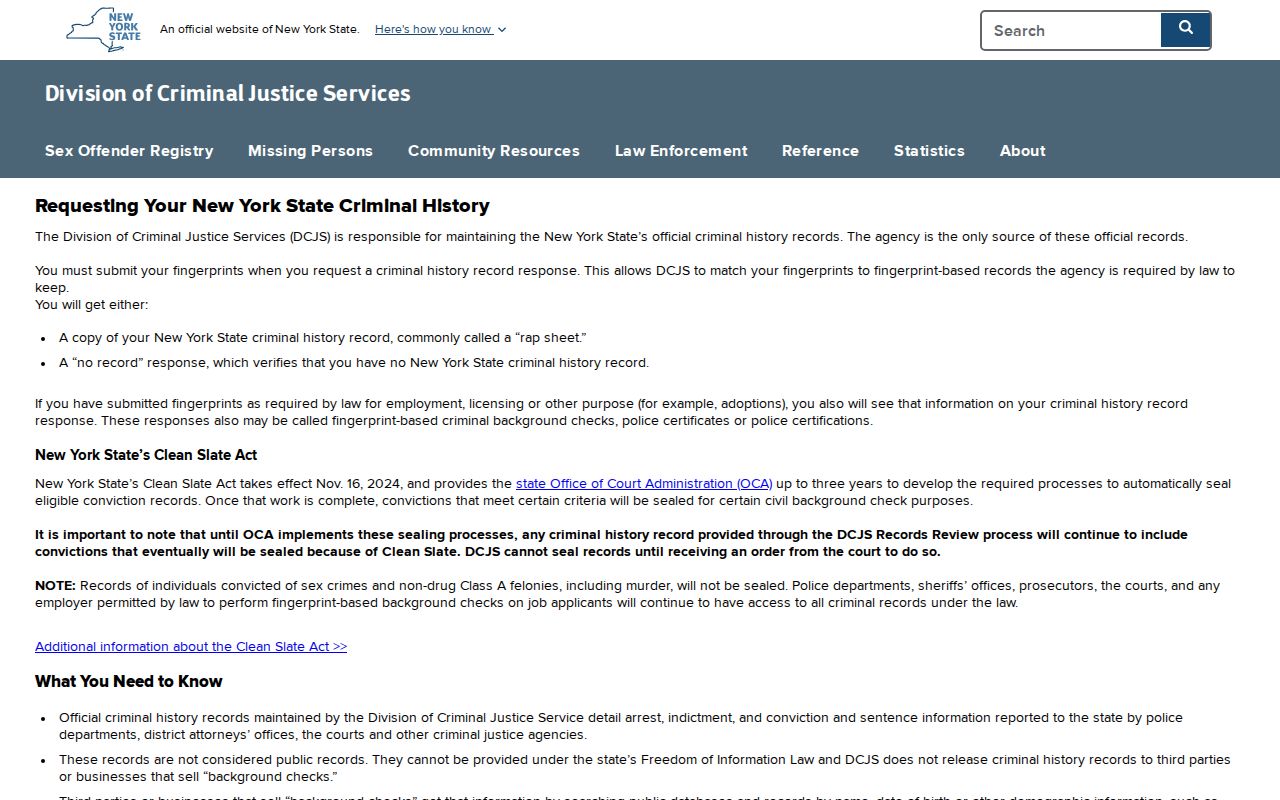
This official route links a request to fingerprints rather than relying on a name match.
| Official product | Method | Researched cost | Result |
|---|---|---|---|
| DCJS Personal Record Review | IdentoGO fingerprints | $17.50 as of February 2, 2026 | Suppressed or unsuppressed self-review |
| UCS CHRS | Exact name and date of birth | $95 | Statewide court-history search, not a rap sheet |
IdentoGO uses service code 15464Z for a suppressed response and 15465F for an unsuppressed response. DCJS says the response is mailed in three to four weeks. Appointment sites and hours change, so use the live locator rather than assuming Warren County has a fixed storefront.
The IdentoGO enrollment site displays the scheduling route used for the fingerprint appointment.
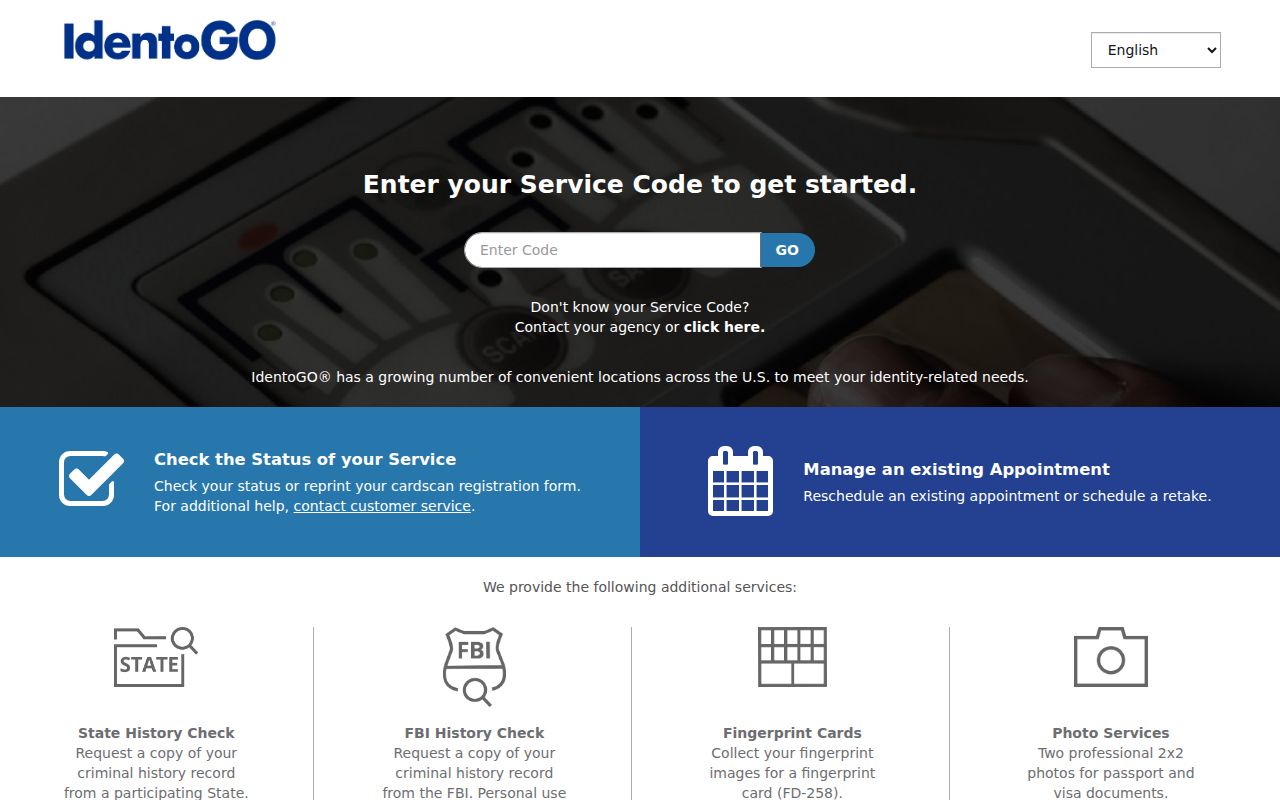
That appointment supplies the identity match needed for the DCJS response.
Warren County Criminal Records Campus
The Warren County records path is unusually compact. County and Supreme Court, county government offices, and the public law library are associated with the Warren County Municipal Center at 1340 State Route 9, Lake George, NY 12845. Next door, the Sheriff's Public Safety Building and Correctional Facility at 1400 State Route 9 hold sheriff, arrest, booking, and custody functions. The split matters even though the buildings are close.
The Warren County government homepage is the official starting point for department routing.
Its directory helps distinguish county offices from town and city record holders.
Courts and Law Library
1340 State Route 9
Lake George, NY 12845
518-285-8518 for the law library
Sheriff Central Records
1400 State Route 9
Lake George, NY 12845
518-743-2500 option 4
County Corrections
1400 State Route 9
Lake George, NY 12845
518-743-2500 option 2
The first-floor law library is open Monday through Friday from 9 a.m. to 5 p.m. It has two public research computers, staff support, and printing or copying at 25 cents per page. It is a practical fallback for older court material that is not online.
The Warren County Sheriff's coverage model also shapes where a record begins. Patrol provides primary law enforcement to eleven towns, supplements Glens Falls, and works from substations in Warrensburg and Chestertown. Its page reports about 23,000 calls and roughly 450 arrests a year, plus about 1,200 fire and EMS responses. Queensbury is divided into two patrol sectors because of population and call volume. These are workload figures, not conviction totals, but they explain why many town incident and arrest requests start at the centralized Sheriff records office.
Types of Criminal Records in Warren County
A Warren County criminal history is assembled from files with different purposes. The arresting agency writes an incident or arrest report. Corrections creates the booking file. A city, town, County, or Supreme Court records the prosecution. DCJS joins fingerprinted arrest cycles with later agency reports. DOCCS creates prison and community-supervision data when a state sentence follows.
- Arrest and booking files: report what officers alleged and what the jail recorded at intake.
- Court case files: show filed charges, appearances, motions, pleas, dispositions, and sentences.
- DCJS rap sheets: link reported New York arrest cycles to outcomes through fingerprints.
- Warrant records: remain with courts and law enforcement and do not appear in WebCrims.
- Custody and supervision records: separate county jail, DOCCS incarceration, probation, and parole functions.
The type controls where to ask. A booking entry cannot prove a conviction, and a docket does not replace the police report that explains the event.
Warren County Jail and Prison Records
No official live Warren County inmate roster was located. For current county custody, call Corrections or use New York VINE for status and optional notification. VINE may receive booking updates and can notify registered users about release, transfer, or escape. It is not a full arrest report and does not establish the final charge.
After a state-prison transfer, use the DOCCS Incarcerated Lookup instead.
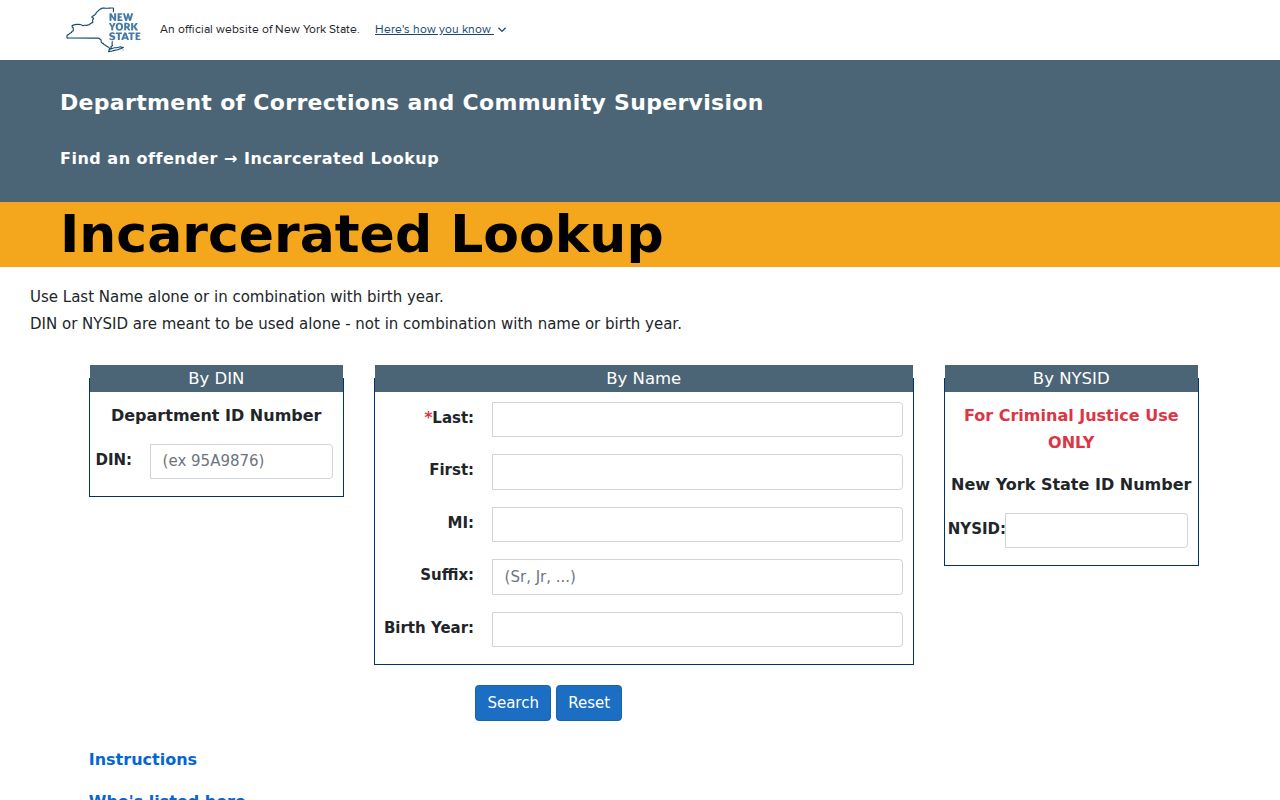
DOCCS results can distinguish state custody or release information from a Warren County jail event.
Warren County Corrections reports a 186-bed maximum, 705 annual admissions, and an average daily population of 93 on its current page. A 2023 county planning report described 180 capacity and recent populations near 85 to 100. Those figures come from different sources and should not be silently merged. They describe agency workload, not guilt or conviction rates.
What a Warren County Criminal Record Shows
Record fields depend on the custodian. A DCJS response begins with identity data and arrest cycles. A court file centers on docket activity and disposition. A booking record centers on intake, bail, and release. Public copies may redact Social Security numbers, victim and minor details, health information, or protected addresses.
| Name & Identifiers | Legal name, aliases, date of birth, NYSID, FBI number, or court identifier where the record lawfully displays them. |
|---|---|
| Arrest / Booking Data | Arrest date, agency, intake time, booking number, custody status, and initial charge. |
| Charges & Statutes | Alleged offense, Penal Law section, degree, class, and the charges later filed by the prosecutor. |
| Disposition | Dismissal, plea, verdict, or other outcome for each charge. |
| Sentence | Custody, probation, fine, restitution, or other court order when part of the public file. |
| Custody / Supervision | Jail, prison, release, probation, parole, or community-supervision information from the responsible office. |
Verify any name match with dates and file numbers. When a DCJS result looks wrong, obtain a certified court disposition and follow the challenge instructions supplied with the response.
From Warren Arrest to Rap Sheet
An arrest can create several Warren County records within a short span. The arresting officer produces an agency report. Corrections confirms authority to hold the person, records property and safety intake, and enters custody facts. The arraigning court then creates its own case. For a fingerprintable event, identifying data goes to DCJS, while the court later reports disposition and sentence.
Record flow: Incident or arrest report → booking and fingerprints → local arraignment → prosecutor or grand jury action → court disposition → DCJS update.
These updates are not simultaneous. An intake count may change after prosecutor review, and a felony complaint can move from a local court to Warren County Court after indictment. That is why the Warren County criminal court case file is the best source for the filed charge and final outcome, while an arrest report remains important for the event narrative.
Note: A missing disposition on one system calls for confirmation with the court, not an assumption that the case has no outcome.
Public Access Laws for Warren County Criminal Records
New York Freedom of Information Law governs agency records such as sheriff reports, but court files follow court-access rules. DCJS rap sheets are not public agency records obtainable through FOIL. Sealing, youthful-offender confidentiality, Family Court limits, grand-jury secrecy, and privacy exemptions can remove or redact material that would otherwise be available.
Key New York laws:
Public Officers Law Article 6 presumes access to agency records while allowing specific privacy, safety, and law-enforcement exemptions.
CPL 160.50 seals qualifying favorably terminated criminal actions.
CPL 160.59 permits eligible people to apply to seal certain convictions.
CPL 160.57 creates automatic Clean Slate sealing for eligible convictions on statutory timelines.
Correction Law Article 6-C controls sex-offender registration, disclosure, and misuse rules.
A focused request works best. Name the existing report, date range, location, incident number, agency unit, and preferred format. The office may redact protected parts instead of withholding an entire Warren County record.
Warren County Sheriff FOIL Fallback
Sheriff Central Records is the fallback for incident reports, arrest records, calls for service, and booking files created by that office. The Sheriff FOIL form asks for requester contact details, a precise description, inspection or copy preference, signature, and date. It can be mailed or taken to 1400 State Route 9, and Central Records is reached at 518-743-2500 option 4.
- Identifiable record
- An existing file described with enough detail for staff to locate it.
- Inspection
- Review of an available record rather than ordering a copy.
- Redaction
- Removal of protected details while releasing the rest of a record.
- FOIL appeal
- The agency process for challenging a written access denial.
FOIL does not require the sheriff to answer questions or create a new compilation. An agency generally acknowledges a request within five business days and then provides access, gives a reason for denial, or supplies an approximate decision date. Ordinary paper copies up to 9 by 14 inches may cost as much as 25 cents per page.
Sealed, Expunged, and Restricted Records
New York mainly uses record sealing. CPL 160.50 covers many favorable terminations, while CPL 160.55, 160.58, and 160.59 address other eligible outcomes or applications. Youthful-offender and juvenile material is confidential. Grand-jury minutes remain secret even when an indictment itself is public.
Clean Slate under CPL 160.57 took effect November 16, 2024, and gives the court system up to three years to implement automatic processes. Eligible misdemeanors generally use a three-year clock and eligible felonies an eight-year clock under the law's conditions. Sex offenses and non-drug Class A felonies are excluded. Defined criminal-justice and other authorized users may retain access even after public sealing.
For an application under CPL 160.59, start with the court of conviction, obtain a certificate of disposition, prepare the statewide papers, serve the prosecuting office as required, and file in the sentencing court. After an order, check both the court index and DCJS response. Warren County filing fees were not located in the official research sources.
Warren County's Historic Criminal Archives
Warren County Records Storage and Archives preserves a deeper record trail than current web searches reveal. The first Court of Common Pleas sat in May 1813, and the first General Sessions inquiry or indictment was filed that September. A jail built in 1817 burned with the courthouse in 1843. Later, the county used temporary space in Glens Falls while its justice facilities evolved.
The Records Storage and Archives portal explains how staff retrieve records and approve copy requests.
That office is the correct source for approved access to older county material.
The county also describes its surviving 1868 to 1883 Jail Record Book.
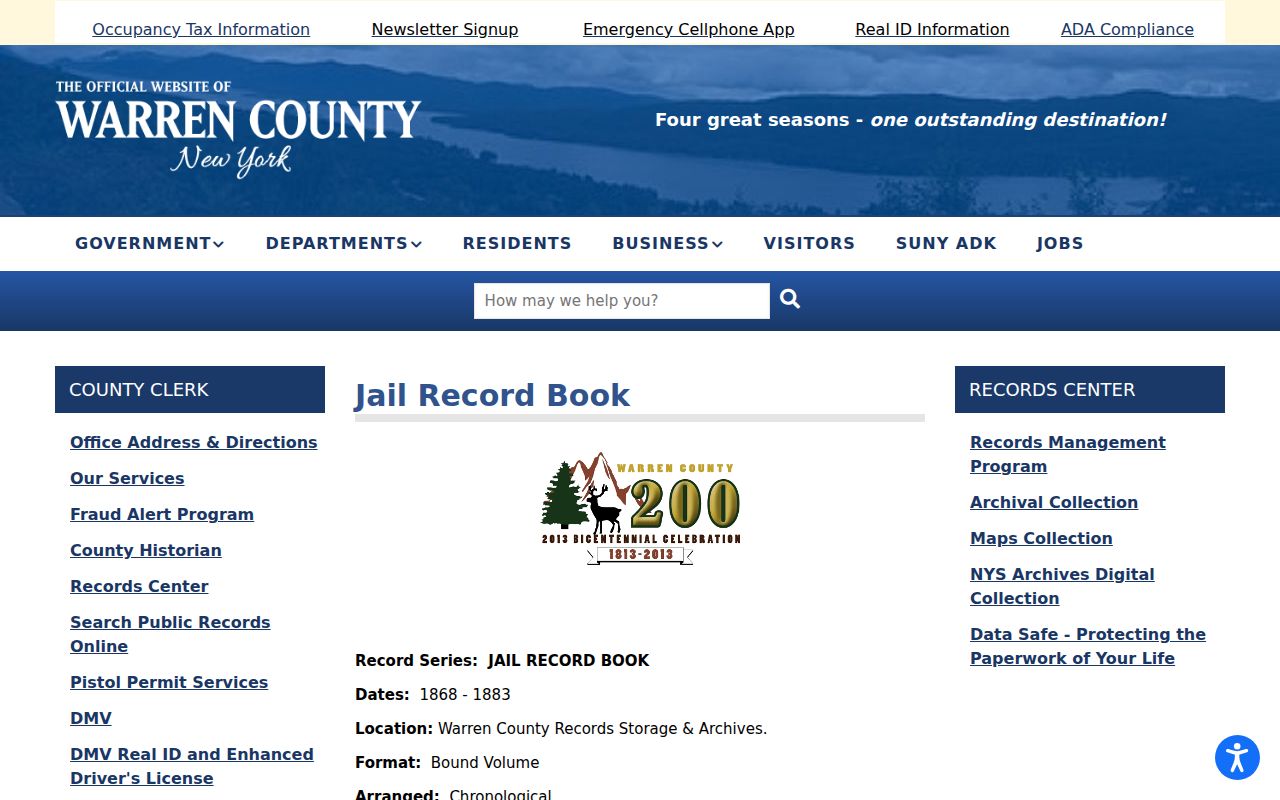
The ledger recorded commitment, physical description, occupation, offense, sentence, and discharge, showing how record fields and privacy expectations changed over time.
Federal Criminal Records Near Warren County
County and state searches do not capture a federal prosecution. Warren County lies within the Northern District of New York. Federal court users need PACER for official docket sheets and filed documents, subject to registration and the current federal fee schedule. The Federal Bureau of Prisons locator covers federal custody, not Warren County Corrections or DOCCS.
The Northern District of New York website identifies the federal court and its official services.
This separate layer matters when the charge arises under federal rather than New York law.
PACER is the judiciary's docket access system.
A federal docket should be checked and verified apart from any Warren County court result.
Criminal Records by City in Warren County
Municipal paths differ across Warren County. Glens Falls is the county's only incorporated city and has its own police department and City Court. Queensbury and Warrensburg are towns, not cities, but the research identifies them as the next largest practical municipal profiles. Both rely chiefly on the Warren County Sheriff for law enforcement while their town courts keep local case files.
Glens Falls Criminal History
14,830 in 2020 · GFPD records, City Court cases, and county jail routing
Queensbury Criminal History
29,169 in 2020 · Sheriff records and Queensbury Town Court
Warrensburg Criminal History
4,820 in 2020 · Sheriff substation context and Town Court records